
When Ray J told The Breakfast Club he’s slept with 12,500 women—sometimes as many as 10 in a single day on tour—he didn’t just drop a jaw. He ignited a cultural conversation about hypersexuality, fame, credibility, and the blurred line between brand narrative and truth.
This isn’t just a salacious headline. It’s a claim that requires scrutiny: mathematically, emotionally, and culturally. Whether you see it as boast, performance art, or personal testimony, the statement reflects larger patterns in celebrity culture—especially within hip hop and R&B circles—where sexual conquests are often currency.
Let’s dissect it thoroughly.
Breaking Down the Numbers: Is 12,500 Plausible?
Ray J didn’t just say he’s been with a lot of women. He gave a specific number—12,500—and a rate of up to 10 women per day while touring. To evaluate credibility, we need to apply rough arithmetic.
Assume Ray J began being sexually active at 18. At the time of the interview, he was in his early 40s. That gives us roughly 25 years of activity.
- 12,500 ÷ 25 years = 500 women per year
- 500 ÷ 365 = ~1.37 women per day, every single day
That’s the average. But he claims spikes—10 in one day—during tours. So what does that imply?
On tour, artists may spend 60–90 days annually traveling and performing. If Ray J was averaging 5–10 encounters per day on those tours, that’s 300 to 900 women per tour season. Over 15 years of active touring, even conservative estimates could push him into the thousands.
But here’s where reality bites:
- Physical endurance
- Recovery time
- Logistics (privacy, discretion, scheduling)
- Emotional or psychological toll
Even if biologically possible for brief periods, sustaining such a pace long-term strains credibility. Dr. Justin Lehmiller, research psychologist and author of Tell Me What You Want, notes that most people—even those with high sexual desire—rarely exceed 2–3 partners per week consistently. Ten in one day? “Extremely rare, likely exaggerated,” he’s said in past commentary on similar claims.
Still, in celebrity culture, numbers aren't just data—they’re branding.
The Culture of Conquest: Sex as Status in Hip Hop
Ray J didn’t emerge from a vacuum. His claim fits a long-standing tradition in hip hop and R&B: sexual prowess as proof of success.
From Snoop Dogg’s “groupie” narratives to R. Kelly’s controversial lifestyle, to Lil Wayne’s “I’m single, I’m not solitary” quips, male artists have long used sexual exploits to assert dominance, freedom, and desirability.
Ray J’s 12,500 claim isn't unique—it's a continuation of a performance.
- It signals independence.
- It rejects monogamy as a constraint.
- It aligns with the “player” archetype that sells music, merchandise, and media attention.
Consider this: when Rick Ross bragged about non-consensual acts in a lyric, backlash followed. But when Ray J talks about consensual encounters with fans, the reaction is often laughter, disbelief, or admiration.
Why? Because in this narrative, women are willing participants. The issue isn’t legality—it’s scalability and honesty.
The Fan Dynamic: Power and Access

On tour, artists operate in a world of asymmetrical power. Backstage access, VIP meetups, after-parties—these are controlled environments where fans are often awestruck, eager to please.
Is every encounter equal?
Not necessarily. The line between mutual attraction and exploitation can blur when fame, alcohol, and opportunity intersect.
Ray J has never claimed coercion. But the environment enables high-volume intimacy. A 2018 Rolling Stone investigation into tour culture revealed that some artists keep “roster” lists of contacts, facilitated by staff or security. Whether Ray J uses such systems is unconfirmed—but the infrastructure exists.
And let’s not ignore the role of social media. Direct messages, Instagram flirtations, and location tagging make connecting with fans easier than ever. One artist’s team admitted off-record that “three to five” encounters per tour stop weren’t unusual during peak years.
Ray J’s 10-per-day claim may be hyperbolic—but it’s not entirely implausible in that context.
The Psychological Cost of the “Player” Persona
Even if physically possible, what does sleeping with 12,500 women do to a person mentally?
Therapists who work with entertainers say the “player” lifestyle often masks deeper issues: fear of intimacy, trauma, or identity built entirely on external validation.
Dr. Jenn Mann, relationship expert and author, explains: “Serial sexual activity without emotional connection can become a coping mechanism. It’s not about pleasure—it’s about filling a void.”
Ray J has been open about relationship struggles. His high-profile romance with Kim Kardashian, the breakup, the leaked tape, the media firestorm—none of it ended cleanly. Since then, he’s had short-term relationships, public flings, and fathered children with multiple partners.
Could the 12,500 number be a defense mechanism? A way to reframe vulnerability as dominance?
Possibly. The more women you say you’ve been with, the less any one relationship matters. It’s a shield.
And yet—there’s joy in the claim too. For Ray J, sex may genuinely be a source of confidence, connection, and fun. He’s said in interviews that he “loves women,” not just their bodies, but their energy, their stories.
So is it all bravado? Or is it a distorted reflection of a real, complicated sex life?
Media Amplification: Why This Story Went Viral
Let’s be honest: if Ray J said he meditates daily or volunteers at animal shelters, it wouldn’t make headlines.
But 12,500 women? That’s clickbait gold.
Outlets from Complex to The Shade Room ran the story with variations of “Ray J DROPS BOMBSHELL Number.” The quote spread because it fits a familiar script: the rich, famous man with limitless access.
But the media doesn’t just report—it shapes. By repeating the claim without context, it normalizes extreme behavior and discourages critical thought.
Compare this to similar claims:
- Wiz Khalifa once said he’s been with over 1,000 women—met with nods, not disbelief.
- Kanye West once claimed he hadn’t had sex in years—met with concern, not mockery.
Double standards abound. Male artists are praised for virility; women like Cardi B or Megan Thee Stallion face slut-shaming for similar openness.
Ray J’s story, then, isn’t just about him. It’s about how we consume celebrity sexuality—uncritically, voyeuristically, and often without asking: What’s the cost?
The Reality Behind the Rhetoric: What We Know
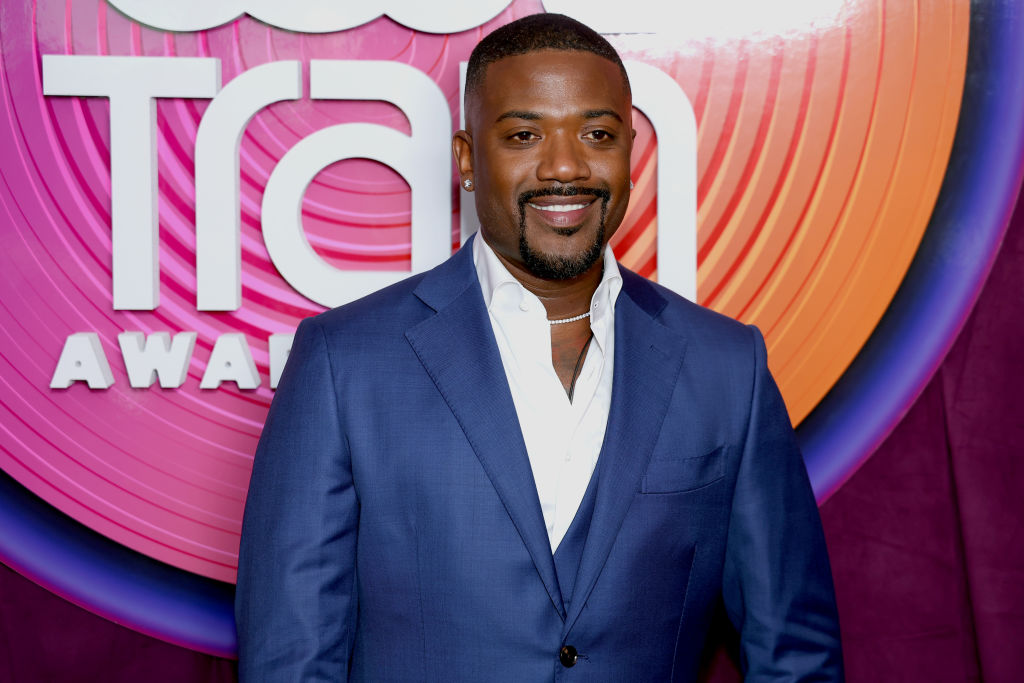
Ray J has never released proof of his 12,500 figure. No names, no logs, no third-party verification. It’s a self-reported number—common in celebrity interviews, but rarely accurate.
Consider past claims:
- Charlie Sheen said he had “goddesses” and “tiger blood”—later revealed to mask a struggle with addiction.
- Kanye West claimed he designed the Yeezy sneakers in Photoshop—oversimplifying a team effort.
- T.I. claimed he had 800 women in one year—later admitted it was “rhetoric.”
These statements aren’t lies, necessarily. They’re exaggerations used to solidify a persona.
Ray J’s brand—musician, entrepreneur, reality star, sex tape figure—relies partly on sexual mystique. The higher the number, the stronger the myth.
That doesn’t mean it’s entirely false. He may have had hundreds, even over a thousand. But 12,500?
At 34 women per year from age 18 to 43, it’s possible. But it requires near-superhuman consistency—no dry spells, no heartbreaks, no illness, no downtime.
And that’s unlikely for anyone.
Why the “10 a Day on Tour” Claim Defies Logic
This is the most extreme part of Ray J’s statement: 10 women in a single day.
Let’s walk through a hypothetical 24-hour period:
- 6 hours for sleep (generous)
- 2 hours for travel
- 3 hours for soundcheck and performance
- 1 hour for meals
- 1 hour for hygiene
That leaves 11 hours.
Now, fit in 10 sexual encounters.
Even if each interaction takes 30 minutes (including undressing, intimacy, cleanup), that’s 5 hours minimum. Add emotional labor, conversation, transport (if different rooms), and security concerns.
It’s not impossible—but it’s less about sex and more about logistics. This isn’t pleasure. It’s productivity.
And then there’s the physical toll. Multiple ejaculations in a short span can lead to fatigue, soreness, or even temporary erectile issues. Urologists warn against overexertion—yet such health concerns are never part of the narrative.
In reality, most high-activity phases last days or weeks—not years. Burnout is real.
The Legacy of the Claim: Myth, Marketing, or Misunderstanding? Whether true or not, Ray J’s statement has already served its purpose: it keeps him in the conversation.
In 2024, relevance is currency. And controversy drives clicks.
But beyond the noise, this claim raises real questions:
- When does personal freedom become self-destruction?
- How do we separate empowerment from exploitation?
- Can someone truly “love women” while reducing them to a tally?
Ray J has said he doesn’t regret his lifestyle. He sees it as freedom. And for some, that’s inspiring.
But for others—especially young men consuming this content—it risks promoting unrealistic standards. Not everyone has a tour bus, security, or fame. For most, chasing 10 encounters a day would end in exhaustion, embarrassment, or worse.
We should celebrate sexual agency—but not at the expense of truth, health, or humanity.
A Final Note: Context Over Clicks
Ray J’s 12,500 claim isn’t just about sex. It’s about power, performance, and the price of fame.
It’s unlikely to be literally accurate. But it is culturally significant.
Instead of laughing or judging, ask: Why do we reward these narratives? Who benefits? And what stories go untold—the ones about connection, healing, or real intimacy?
Numbers impress. But meaning lasts longer.
Actionable Takeaway: When you hear extreme celebrity claims, pause. Ask: Is this fact, fiction, or marketing? And more importantly—what story is not being told?
Frequently Asked Questions
Did Ray J really sleep with 12,500 women? There’s no verifiable evidence. The claim is self-reported and likely exaggerated for effect, though it may reflect a high number of past relationships.
How many women a day did Ray J say he slept with on tour? He claimed up to 10 women in a single day while touring—though this defies logistical and physical plausibility.
Is it healthy to sleep with multiple partners frequently? Sexual health depends on consent, protection, and emotional well-being. High-frequency activity without emotional connection can lead to burnout or psychological strain.
Has Ray J faced backlash for his claim? Reactions were mixed—some laughed it off, others criticized it as irresponsible or unrealistic. No major professional consequences followed.
Does Ray J regret his lifestyle? No. He’s stated he embraces his past, sees himself as a lover, and doesn’t view his experiences negatively.
How does Ray J’s claim compare to other celebrities? Similar to boasts by Wiz Khalifa, T.I., or 50 Cent—but higher in volume. Most such claims are considered hyperbolic rather than factual.
What impact does this have on fans? For some, it reinforces toxic masculinity or unrealistic expectations. For others, it represents sexual freedom—highlighting the need for balanced dialogue.
FAQ
What should you look for in Ray J Claims 12,500 Women: Truth Behind the Tour Tales? Focus on relevance, practical value, and how well the solution matches real user intent.
Is Ray J Claims 12,500 Women: Truth Behind the Tour Tales suitable for beginners? That depends on the workflow, but a clear step-by-step approach usually makes it easier to start.
How do you compare options around Ray J Claims 12,500 Women: Truth Behind the Tour Tales? Compare features, trust signals, limitations, pricing, and ease of implementation.
What mistakes should you avoid? Avoid generic choices, weak validation, and decisions based only on marketing claims.
What is the next best step? Shortlist the most relevant options, validate them quickly, and refine from real-world results.




/cities-skylines-5a0ef1eabeba3300375673ba.png)
