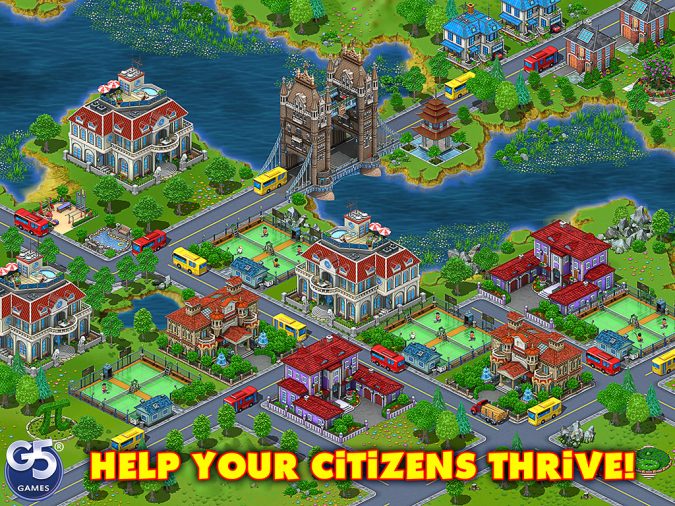
Building a city from scratch is more than just placing roads and zoning districts—it’s about vision, balance, and seeing your digital metropolis thrive. For laptop users, the challenge has always been finding robust city-building experiences that don’t demand high-end hardware or deep pockets. The good news? There are legitimate, free city building games that deliver satisfying urban simulation without downloads you regret or microtransactions at every turn.
These aren’t watered-down mobile ports or browser demos that crash after 10 minutes. These are real games—some open-source, some indie passion projects, others surprisingly polished titles—that run smoothly on most modern laptops. Whether you're on a budget machine or just want to test the genre before investing, these picks offer depth, scalability, and long-term engagement.
Let’s break down the best free city building games you can play right now—no credit card required.
Why Free City Building Games Work on Laptops
Laptops vary widely in performance, but city builders are often more CPU and RAM-dependent than GPU-heavy. Many free titles in this genre are designed with accessibility in mind, favoring efficient code over flashy graphics. That makes them ideal for integrated graphics, older processors, and systems with 8GB of RAM or less.
Free city builders also tend to avoid real-time multiplayer or live server dependencies, meaning they run offline and won’t eat your data plan. Most support windowed mode, suspend/resume workflows, and even touchpad controls—key for casual play during downtime.
But beware: not all “free” city builders are created equal. Many are ad-infested, lock core mechanics behind paywalls, or push in-app purchases aggressively. The following list filters out the noise and focuses on genuinely playable, rewarding experiences.
Top 7 Free City Building Games for Laptop
Here are the most reliable, fully functional free city building games you can install or play directly in your browser. Each has been tested for stability, usability, and actual gameplay depth.
| Game | Platform | Offline Play | Key Feature |
|---|---|---|---|
| SimCity BuildIt (Web Version) | Browser | Limited | Mobile port with browser access |
| Cities: Skylines (Free Trial) | Steam | Yes | Full-featured demo with save transfer |
| OpenCity | Windows, Linux, macOS | Yes | Open-source 3D city sim |
| TheoTown | Web, Desktop | Yes | Pixel-art city builder with mod support |
| Castles | Browser (newgrounds.com) | Yes | Niche medieval city/defense hybrid |
| Micropolis | Browser, Desktop | Yes | Original SimCity open-source version |
| Citybound (Alpha) | GitHub/Download | Yes | Ambitious open-source project |
Let’s look at each in detail.
#### SimCity BuildIt (Web Version)
While primarily a mobile game, SimCity BuildIt offers a surprisingly usable web version via platforms like AirConsole. It lets you sync with your mobile account and play on a larger screen—ideal if your laptop doubles as a secondary control station.
It’s freemium, but casual players can progress without spending. The UI adapts well to mouse input, and loading times are minimal. Just avoid the temptation to “speed up” construction—patience is part of the design.
Pro Tip: Use the web version to plan layouts, then switch to mobile for minor updates on the go.
#### Cities: Skylines – Free Trial
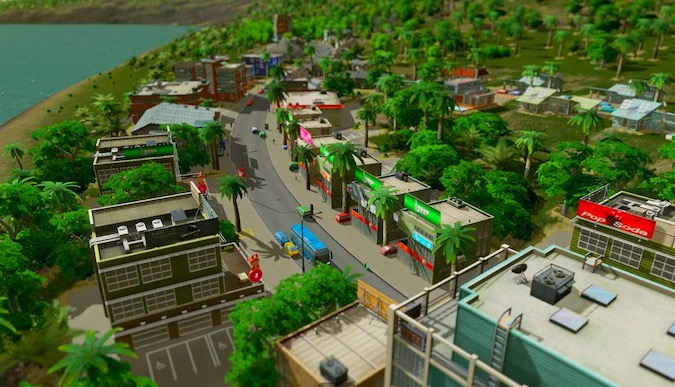
Paradox Interactive offers a full 90-minute free trial of Cities: Skylines on Steam. While time-limited, it’s fully functional—30-minute sessions are enough to start a new city, zone areas, manage traffic, and test basic infrastructure.
What sets this apart: it’s the real deal. Not a dumbed-down demo, but the complete game experience with all core mechanics. If you end the session mid-game, you can purchase and continue your progress.
Runs well on most laptops with Intel Iris Xe or better integrated graphics. Minimum RAM: 6GB.
#### OpenCity
A lesser-known open-source gem, OpenCity simulates 3D urban environments with surprisingly deep simulation mechanics. You manage zoning, power, water, and even pollution. The graphics are dated but functional.
Best for: learners, tinkerers, or those interested in how city sims actually work under the hood. It’s not polished, but it’s educational and completely free.
Limitation: No terrain editing or road customization—basic tools only.
Still, it compiles cleanly on Windows and Linux laptops, making it ideal for older machines.
#### TheoTown
Blending retro pixel art with modern city-building logic, TheoTown is a standout. Originally a mobile hit, it now offers desktop versions for Windows, macOS, and Linux. The free version includes ads, but they’re unobtrusive and don’t interrupt gameplay.
Features: - Realistic traffic AI - Disaster events (fires, pollution) - Active modding community - Save anywhere, play offline
It runs flawlessly on low-end laptops. Even with 4GB RAM and integrated Intel HD graphics, you’ll experience smooth performance.
#### Castles (Browser)
A hidden gem on Newgrounds, Castles blends city building with medieval fortress management. You design keeps, walls, and support buildings while allocating peasants and resources.
It’s turn-based, so performance isn’t an issue. Perfect for short sessions between work or study blocks.
While not a modern city sim, it teaches core planning principles: resource allocation, spatial hierarchy, and defense logistics.
#### Micropolis
Yes, this is the original SimCity, open-sourced and rebuilt for modern systems. Known as Micropolis (due to trademark reasons), it’s available via the OLPC project and runs in-browser or standalone.
Despite its age, the simulation is shockingly robust. Zoning, power grids, disaster modes—all intact. The interface feels dated, but there’s charm in the simplicity.
Ideal for: - Teaching urban planning basics - Nostalgic players - Educational use in classrooms
Runs on virtually any laptop made in the last 15 years.
#### Citybound
Still in alpha, Citybound is an ambitious open-source successor to Cities: Skylines. It focuses on realistic traffic, economy, and dynamic citizen behavior.
You can download early builds from GitHub. It’s unstable in parts, but the vision is clear: a free, moddable, high-fidelity city builder.
Best for technically inclined users. Requires some setup (Node.js, dependencies), but runs well once configured.
Workflow Tip: Use a lightweight Linux distro in dual-boot mode if your Windows laptop struggles with background processes.
What to Avoid in Free City Builders
Not every game labeled “free city building” deserves your time. Watch out for these red flags:
- “Free” but requires $20 DLC to progress – Some titles gate core tools behind expansions.
- Always-online requirement – Limits usability on weak or shared connections.
- No save functionality – Progress lost on close? Instant discard.
- Ad overload – Pop-ups every 60 seconds ruin immersion.
- Fake downloads – Sites offering “cracked” paid games often bundle malware.
Stick to official sources: Steam, GitHub, itch.io, or trusted indie portals.
How to Get the
Most From Free City Builders
Treat free games like prototypes or learning labs. Use them to:
- Test mechanics before buying premium titles
- Practice urban design without consequence
- Experiment with mods or custom maps
- Run background simulations while working (yes, some are relaxing enough for that)
One player used TheoTown to prototype a sustainable neighborhood layout before building it in Cities: Skylines. Another used Micropolis to teach middle-schoolers about zoning laws.
“I run OpenCity in a window while writing. Watching my city grow in the corner keeps me motivated.” – Julia, freelance designer
These games aren’t just time-killers—they’re creative tools.
Performance Tips for Low-End Laptops
Even free games can lag if misconfigured. Optimize your experience with these steps:
- Run in windowed mode – Reduces GPU strain
- Lower simulation speed – Slows AI processing, cuts CPU load
- Disable shadows/particles – If available in settings
- Close background apps – Chrome tabs are city-building killers
- Use Linux – Lightweight distros (e.g., Lubuntu) boost performance
For Chromebook users: Try browser-based versions or Linux-enabled apps via the Play Store.
Final Verdict: Which Should You Start With?
If you want immediate, polished gameplay: Try the Cities: Skylines free trial on Steam.
If you want long-term free access: Go with TheoTown or Micropolis.
If you’re technically curious or mod-inclined: Dive into Citybound or OpenCity.
No single game does everything—but together, they cover the full spectrum of city-building passion.
FAQs
Are free city building games as good as paid ones? Not always, but some—like the Cities: Skylines trial or TheoTown—offer core mechanics on par with premium titles. Depth may be limited, but learning value isn’t.
Can I play city building games offline on a laptop? Yes. Most listed here support offline play, including TheoTown, OpenCity, Micropolis, and Castles.
Do free city builders have mods? Some do. TheoTown and Citybound have active mod communities. Micropolis supports custom tilesets.
Why does my free city game lag? Even lightweight sims use CPU for AI and simulation. Close background apps, lower game speed, or try a lighter title like Micropolis.
Is Cities: Skylines free forever? No—only a time-limited trial. But you can continue your city if you buy the full game.
Can I export my city to another game? Generally no. Save files are game-specific. But you can screenshot layouts and rebuild them elsewhere.
Are these safe to download? Yes—if you use official sources. Avoid third-party download sites. Stick to Steam, GitHub, itch.io, or the game’s official page.
FAQ
What should you look for in Best Free City Building Games for Laptop Players? Focus on relevance, practical value, and how well the solution matches real user intent.
Is Best Free City Building Games for Laptop Players suitable for beginners? That depends on the workflow, but a clear step-by-step approach usually makes it easier to start.
How do you compare options around Best Free City Building Games for Laptop Players? Compare features, trust signals, limitations, pricing, and ease of implementation.
What mistakes should you avoid? Avoid generic choices, weak validation, and decisions based only on marketing claims.
What is the next best step? Shortlist the most relevant options, validate them quickly, and refine from real-world results.





/cities-skylines-5a0ef1eabeba3300375673ba.png)
